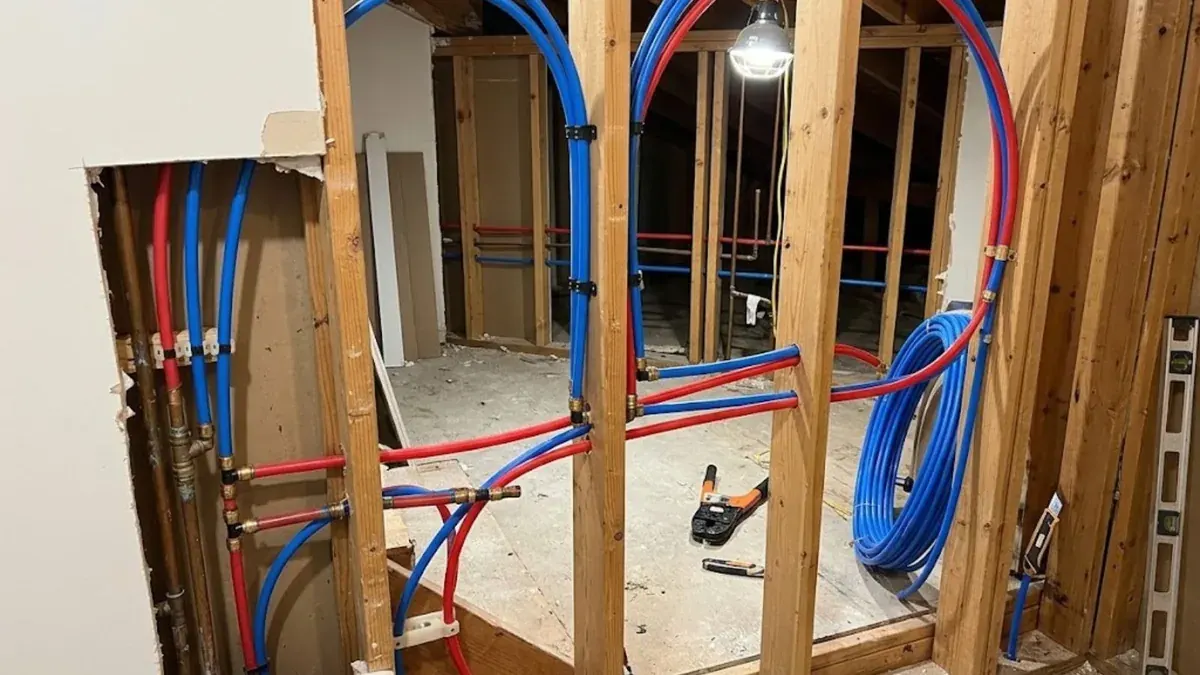
Repiping Services in Wasco, CA
A third pinhole leak in a year, water that comes out rust-colored, or pressure that has faded at every fixture usually means the pipes themselves are wearing out, not a single bad joint.
Repiping replaces worn water supply lines inside your home with new pipe, either throughout the house or along one section.
When patching stops making sense
Repiping in Wasco, CA means removing the old water supply pipes in the walls, ceilings or crawl space and installing new ones, then reconnecting every fixture. It is a planned project, not an emergency call, so there is time to compare options and schedule the work. If a pipe is leaking right now, shut off the main valve and ask the dispatcher about a pipe repair first, because a leak cannot wait for a repipe.
The usual trigger is a pattern. One pinhole can be a one-off, but a second and third within a few months mean the pipe wall is failing along its length. At that point each repair buys time and costs a wall opening, which is why homeowners start asking about a full replacement.
Signs the pipes are at the end of their life
None of these proves a repipe is needed. Several together make the case.
- Repeated leaks in different spots. Pinholes or weeping joints that keep appearing in different rooms.
- Rust-colored or metallic-tasting water. If color appears at every tap at once, ask the water department whether work is happening on the street first. If it only shows at hot taps or after long stretches of no use, the home's pipes are the next suspect.
- Weak flow at several fixtures. Mineral and rust buildup narrows the inside of old steel pipe.
- Stains on ceilings or walls that dry and return. Slow leaks from worn pipe show up as repeating rings.
- Pipe you can see that is flaking or bulging. Visible corrosion in a crawl space or at the water heater connections.
Planning a repipe?
Call the line and describe the pipe, the leaks and the age of the house. A licensed plumber can walk the property and explain the options.
Pipe materials, in plain terms
You may have a mix, since older homes often get partial updates. The plumber identifies each type on the first visit.
| Material | What it is | What to know |
|---|---|---|
| Galvanized steel | Zinc-coated steel pipe, gray with threaded fittings | Rusts from the inside. One reference says it typically lasts 40 to 60 years |
| Copper | Reddish-brown rigid pipe, soldered or joined with fittings | Durable. An inspectors' chart gives copper water lines 50 to 70 years, though it can fail within 20 in aggressive water or soil |
| PEX | Flexible plastic tubing in colored lines | Often used for repipes because it bends around framing and needs fewer joints |
| Polybutylene | Gray or blue plastic supply pipe from past decades | Home inspectors and plumbers flag it for a closer look, so identify it early |
| Cast iron | Heavy black pipe used for drains and waste, not supply | Covered in its own section below |
Pipe choice depends on the home, the budget and local code, and a licensed plumber can explain the trade-offs for your layout.
Repair the leak or replace the pipe?
Repair makes sense when one section is damaged and the rest of the pipe is in good shape. Replacement makes sense when the pipe is thin, scaled or pitted along its length, so another leak is only a matter of time. The way to tell is to look at the cut-out piece and the pipe around it, and ask the plumber to show you.
Cost also matters. A series of repairs, each with a wall opening and a patch, can add up past the price of replacing the run. A plumber can lay out both paths with a clear price, so you decide with the numbers in front of you.
How a whole-house repipe is staged
The sequence varies with the house, but the work generally runs like this.
- Survey and planThe plumber walks the house, identifies old pipe, decides routes and notes every fixture and valve to be replaced.
- Permit checkPermit and inspection requirements are confirmed with the city before work begins.
- Shut off and open accessWater is turned off, and small openings are cut where new pipe needs to pass.
- Run new pipe and connect fixturesNew lines are installed to every tap, toilet, appliance and the water heater.
- Pressure-test and inspectThe new system is brought to pressure and held under watch, then inspected if required.
- Patch and clean upAccess holes are closed. Drywall finishing and paint are handled according to the scope agreed.
Whole house or only the failing run?
A partial repipe replaces one run, such as the hot water line to a bathroom or the supply to a kitchen wing. It leaves the rest in place and costs less up front. The risk is that the remaining old pipe fails next, and you open walls again.
A whole-house repipe replaces everything at once and tends to make sense when the pipe is the same age and material throughout. If your leaks have been in the same area, a targeted repipe may be enough. For hidden leaks that you are still trying to find, leak detection comes before any decision.
Cast iron drain pipes are a different story
Cast iron carries wastewater out of the house, not clean water in. It corrodes and scales on the inside over time, which shows up as slow drains, repeat clogs and sewer smells. An inspectors' chart gives cast iron waste pipe about 60 years above ground and 50 to 60 below ground.
A camera inspection shows the inside of the pipe, and from there a sewer line repair or section replacement can follow. Cast iron drain replacement is usually scoped separately from a supply repipe, though both can be done together to open walls only once.
Repipe, service line or slab leak?
A repipe replaces pipes inside your home. The buried line from the meter to the house is water service line repair, and a leak in or under a concrete floor may be handled as slab leak repair, sometimes by rerouting the pipe through the walls. Describe your symptoms and the dispatcher will pick the right starting point.
Permits and inspections: ask the city
Repiping typically involves a permit and an inspection, but the exact rules come from the local building authority. In Wasco, start with the City of Wasco's Community Development office. The city's municipal code adopts the 2022 California Plumbing Code, while the 2025 edition took effect statewide on January 1, 2026, so confirm with the city which applies to your project.
Nearby towns publish their own. Shafter's building permit page lists plumbing installations among the work that needs a permit, and McFarland lists permit types through its online system. The plumber pulls the permit and schedules the inspection, but you should know what is expected.
Disruption, patching and living through it
A repipe means the water is off for part of the work, and there will be dust, noise and cut openings in drywall. Ask the plumber how long the water will be off each day and whether you can stay in the house. Plan for the kitchen and bathrooms to be out of service for stretches.
Wall patching is part of the job, but paint matching and texture are often scoped separately. Ask who handles them. If your home has finished tile or custom surfaces, tell the plumber before they plan the routes, since a different path can avoid a lot of rework.
What goes into a repiping quote
Repipe pricing is a build-up of the following. No one can quote a house responsibly without walking it.
Insurance policies differ on pipes that simply wore out versus damage from a sudden failure. Ask your insurer what counts.
For a real number, call the number on this page. The price is clear before work starts.
Repiping questions, answered
Yes. The line is open 24/7, and a licensed plumber can usually be scheduled the same day to stop the leak. Repiping itself is planned ahead, and we can talk through the decision after the immediate problem is handled.
Galvanized pipe is gray, magnetic and threaded at the joints. Polybutylene is a flexible gray or blue plastic. A plumber confirms by looking at the pipe near the water heater, in the crawl space or under sinks.
Water is off for parts of the work, and the plumber can usually restore it at the end of each work period. Ask how the schedule will run so you can plan around it.
Most repipes involve a permit and inspection, but the City of Wasco sets the rules. Contact Community Development before work starts and ask what applies.
It can be, if the failing pipe is a clear run and the rest is in good shape. If the remaining pipe is the same age and material, the next leak may appear elsewhere and a larger project may make more sense.
Schedule it between tenants if you can, or give tenants notice about the water shutoffs. A plumber can walk the unit and give a written scope with the price before the work starts.
Replace the run, not the patch
If your pipes keep failing, a repipe stops the cycle. Call the number on this page to set up an assessment with a clear price before work starts.