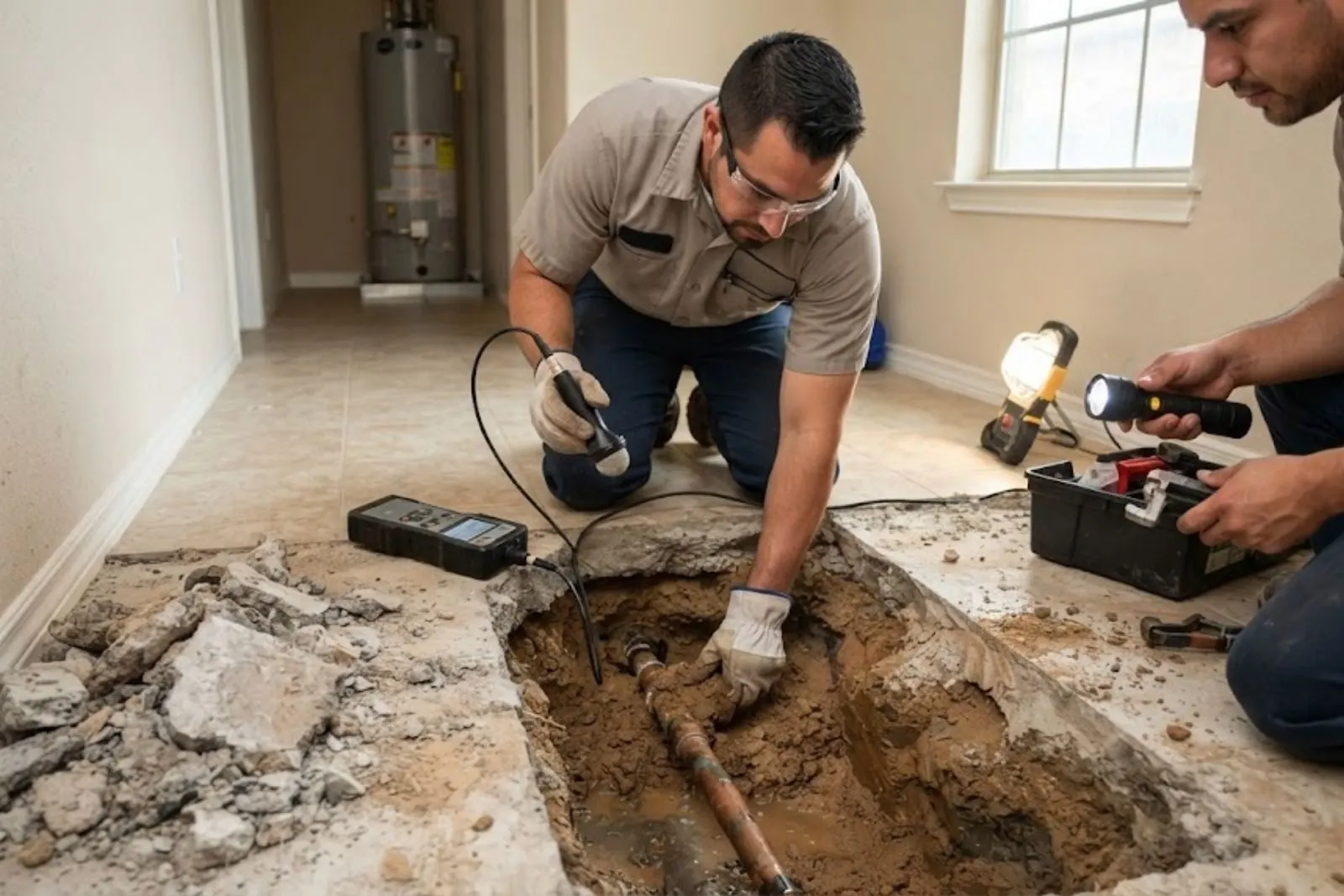
Emergency Slab Leak Repair in Wasco, CA
A floor that feels warm for no reason, flooring that lifts at the seams, or a meter that spins while every wall stays dry can all trace back to a pipe leaking in or under a concrete slab.
This page covers how those leaks are pinpointed and the three ways they get repaired.
Water under the floor? Shut it off first
Water that surfaces through a concrete floor is an emergency because it keeps flowing under pressure all day. Our line is open 24/7, and we send a licensed plumber the same day when one is available. Until they arrive, close the main valve, keep appliances and cords off the wet floor, and stay off any warm or slick area.
A slab leak is a leak in a water pipe that runs inside or beneath a poured concrete foundation. This applies to slab-on-grade homes, and not every home in Wasco, CA is built that way, since some sit over a crawl space. If yours is, the leak gets pinpointed before any concrete is touched.
The first few minutes with a wet or warm floor
These actions protect the house while you wait for the plumber.
Do this now
- Close the main. Turn the home's main valve to the closed position. If you cannot find it, tell the dispatcher and we will talk you through the search.
- Stop heated water use. Skip the dishwasher, washing machine and hot showers. If the leak is on a hot line, that is also one less thing moving through the water heater.
- Get cords and small appliances off the floor. Wet concrete and outlets near the floor do not mix. Leave breaker panels alone if standing water is nearby.
- Lift rugs and valuables. Moisture trapped under rugs, cardboard or furniture turns a bad day into a bigger repair.
- Read the meter. Note the digits now and again when the plumber arrives. The difference tells them how fast water is leaving.
Floor warm and the meter spinning?
Tell the dispatcher what you feel and what the meter shows. A licensed plumber can usually be scheduled the same day, and the line is open overnight.
What a slab leak feels and sounds like
The giveaway is often a warm patch on the floor, especially where hot water pipes pass beneath. A leaking cold line is quieter, showing up as damp carpet edges, lifting laminate, baseboards that swell or a musty smell at the base of walls. A meter that runs while every fixture is shut tells the same story from the outside.
At night you may hear a faint rush or hiss when the house is quiet. A water heater that cycles far more than usual may also point to hot water escaping before it reaches a tap. If the symptoms only show up in one room, tell the plumber which one.
How the leak is pinpointed before concrete is touched
A good locate saves the most money on a slab job. This is the general sequence a plumber follows.
- Confirm it is a supply leakA meter test and a pressure check on the home's water lines rule out a toilet, a faucet or a drain problem. According to EPA guidance, you read the meter before and after two hours with no water in use, and a changed reading probably means a leak.
- Isolate sections of pipeValves and temporary caps split the system into runs. The run that loses pressure holds the leak.
- Listen and traceAcoustic tools pick up leak noise through the slab, and pipe location equipment follows the route of the line under the floor. Tracer gas and thermal imaging are also used to confirm a location, so ask which methods your plumber used.
- Confirm with a second methodThermal imaging of a warm spot, or tracer gas introduced into an emptied line, can back up the first result before anyone cuts.
- Mark the spot and explain the optionsYou see where the leak is and which repair path fits, along with a clear price before work starts.
Reroute, epoxy lining or dig down: comparing slab leak repairs
There are three common paths. The best one depends on how many leaks exist, what the pipe is made of and how much of the house you want disturbed.
| Option | What it involves | Usually fits when | Trade-off |
|---|---|---|---|
| Reroute the line | New pipe runs through walls or the attic, and the old line is capped | Several leaks, aging pipe, or a long run under the floor | More wall and ceiling patching, but no concrete breaking |
| Epoxy pipe lining | A coating is applied inside the existing pipe to seal pinholes and weak spots | Pipe is structurally sound but thinning, and access points are available | Not suited to every pipe, and does not fix a split or a bad fitting |
| Under-slab spot repair | Concrete is cut over the leak, the pipe section is replaced and the floor is patched | One clear leak in an otherwise healthy line | Noise, dust, floor patch and finish matching |
Ask your plumber to explain why one option beats the others for your pipe, not just which one costs least up front. If other leaks appear later, a reroute can look better in hindsight, and the plumber will tell you how worn the rest of the pipe looks.
Is your Wasco home on a slab?
We cannot tell from here how your home was built, so check. A crawl-space access hatch or foundation vents point to a raised floor, while their absence suggests a slab, and a plumber can confirm it on arrival.
Local rules vary. Shafter's city code, for example, states that no water piping shall be installed within a concrete floor slab on grade, with exceptions for approved chases and similar cases. That is Shafter's amendment, so confirm Wasco rules with the city. We dispatch to Shafter as well, and a plumber there checks how each home is piped before suggesting a path.
Hot line or cold line, and why it changes the repair
A hot water leak under a slab often heats the floor surface above it, so it is easier to feel and to find with thermal tools. A cold line leak is cooler, slower to spot and more likely to be found by listening and pressure tests. Either one can undermine flooring long before the meter shows a big jump.
If the plumber finds the pipe is worn along its whole length, patching one spot may only buy time before the next leak. In that case a repipe of the affected run can be the cleaner answer. If you are still unsure where the water is going, hidden leak detection comes first.
What drives the cost of a slab leak job
Slab work ranges widely, which is why no one can quote it responsibly before the leak is located. These are the factors that set the price.
Insurance policies differ on how they treat sudden slab leaks versus slow seepage, and many separate damage from the cost of the pipe repair itself. Ask before work starts so you know what paperwork to keep.
Want your real number? Call the number on this page, describe the symptoms and we will walk you through the next step.
After the repair: drying and flooring
Once the leak is fixed, wet flooring and padding should be dried or removed quickly. A water damage restoration company handles that part, and your plumber can tell you where the water spread so they know where to look. Our service area includes McFarland too, and the same steps apply there.
Slab leak questions, answered plainly
Yes. The line is open 24/7, and we send a licensed plumber the same day when one is available. Water coming up through a floor, or a meter running while the walls are dry, are reasons to call at any hour.
Close the main valve before you call if you can reach it. It slows the damage right away.
A warm patch on the floor, a meter that runs with everything off and no visible wet wall or ceiling are the classic signs. A plumber confirms it by isolating sections of pipe and listening for the leak.
Other causes, like a toilet flapper or an irrigation leak, are ruled out first.
It depends on the pipe. Rerouting avoids cutting concrete and replaces the problem line with new pipe through walls or the attic, which helps when the old pipe is worn. A single clear leak in a healthy line can cost less to repair directly.
No. Lining coats the inside of pipe that is still structurally sound, so it suits pinholes and thinning walls more than splits or failed fittings. The plumber decides whether lining makes sense after inspecting the line.
No. Water under pressure keeps escaping, and it can soak the soil below the slab and may damage flooring above. Delay raises both the water bill and the repair size.
Call the line with the tenant's access details and the meter reading for the unit. We schedule the locate first, then give you a written scope so you can decide on a path with your own records.
Pinpoint first, then choose your repair
Slab repair works best when the leak is located exactly and the options are laid out in plain terms. Call the number on this page and we will start the process.