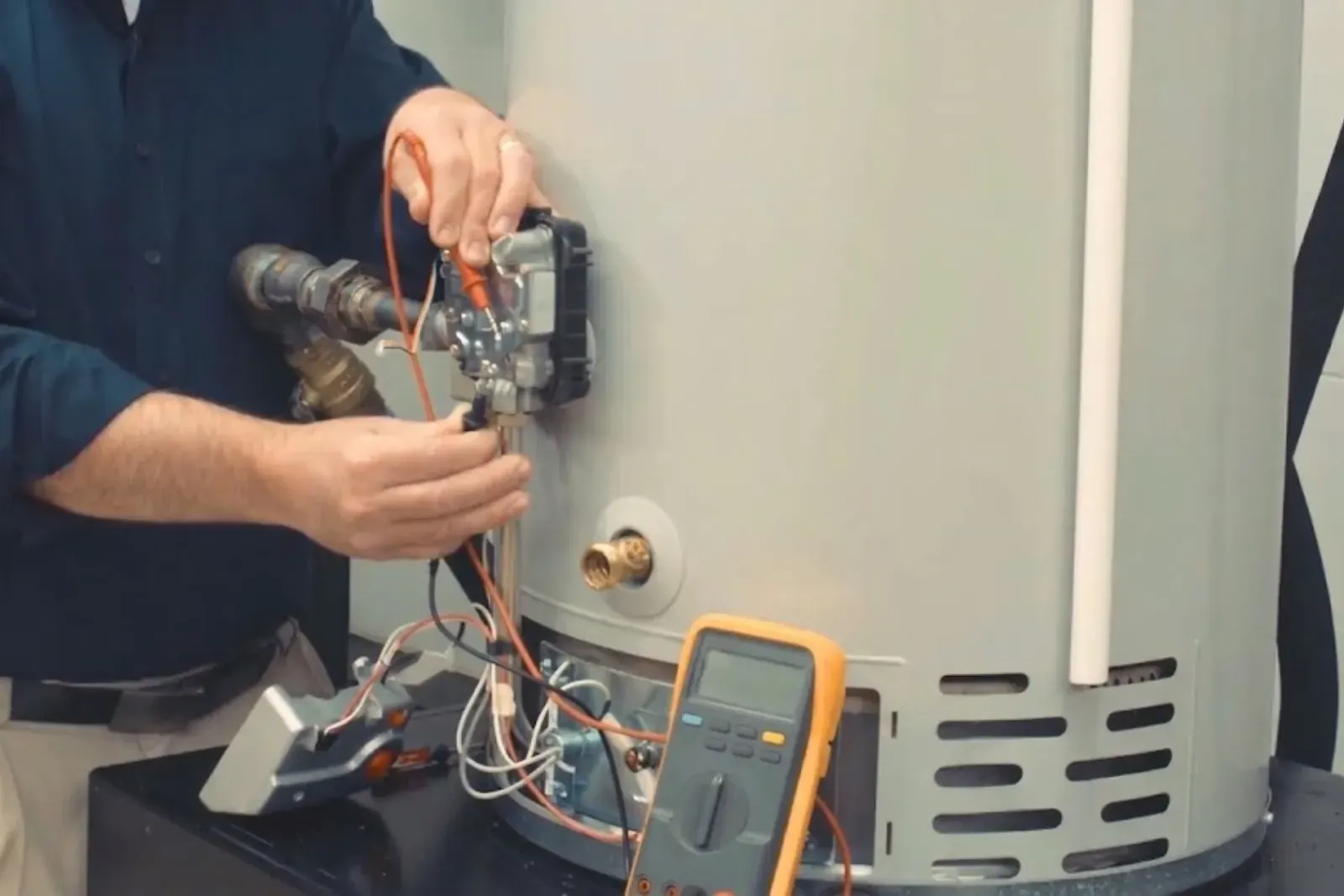
Emergency Water Heater Repair in Wasco, CA
Cold showers, a puddle in the pan, or a pilot that keeps dying all have a cause that can be found in a short visit.
We dispatch a licensed plumber to test the heater, tell you what failed, and price the fix before any work starts.
No hot water or a leaking heater: what to check right now
If the heater is leaking or the house has no hot water, call the 24/7 line and a licensed plumber can be scheduled, with same-day appointments when available. Until then, shut the cold water valve above the tank, turn off the breaker or gas control, and stop using hot taps. Do not touch a heater, cord or breaker while standing in water.
Water heater repair in Wasco, CA is the diagnosis and replacement of failed parts, such as a thermostat, heating element, gas control, igniter, valve or anode rod, so a sound tank keeps heating. The first job is separating a part failure from a tank failure. A cracked element gasket or a dripping valve is a part. Water seeping from the shell is the tank.
Many callers describe the same handful of symptoms: a heater that goes out after lighting, water that is warm but not hot, a pan with water in it, and a stainless tank flashing an error code. Each of those narrows to a short list of causes, which is why a few minutes of testing usually beats guessing.
Leaking heater: stop it in this order
A fast, calm shutdown protects the floor and keeps the repair simple. Work in this order and stop if the floor is wet near power.
Leak and gas smell steps
- Find where the water comes from Look at the top fittings, the side valve, the base and the pipe from the relief valve. Water at a fitting or valve is often a repairable part.
- Shut the supply Close the cold valve on top of the heater. If it will not turn, shut the main at the house. This keeps fresh water out of a compromised tank.
- Remove the energy source Electric: breaker off. Gas: control to off if the area is dry and the heater is not hissing or smelling of gas.
- Smell gas? Leave Walk out on foot. Do not use switches, phones or a garage door opener near the leak. Then call SoCalGas at 1-800-427-2200, or 911 if life or property is at risk.
- Contain the water Towels, a wet vacuum and an open door help. Do not open the relief valve or drain a hot tank, because the water can scald.
Water in the pan or a pilot that will not hold?
Call the 24/7 line, tell us the fuel and what the heater is doing, and we dispatch a licensed plumber with a clear price before work starts.
Symptom, likely cause and what the repair usually is
A plumber confirms these with a meter and a visual check. This table shows the thinking, not a guarantee.
| What you notice | Common culprit | Typical fix |
|---|---|---|
| Gas heater will not stay lit | Thermocouple, flame sensor or dirty pilot | Clean or replace the part, relight and test |
| Electric heater gives no heat at all | Tripped limit switch, failed element or thermostat | Reset, test for continuity, replace the failed part |
| Warm water but never hot | Lower element, thermostat setting or dip tube | Test each, replace what fails |
| Rumbling or popping | Sediment on the tank floor | Flush, then check the recovery |
| Water at the top of the tank | Loose fitting, nipple or supply connector | Tighten or replace the connector |
| Drip from the relief valve pipe | Pressure or worn valve | Test the pressure, replace the valve if it is bad |
| Rotten-egg smell in hot water | Anode reaction in the tank | Inspect the anode, adjust or replace it |
When the tank itself is leaking, repair stops being an option, and replacing the heater becomes the honest answer.
Pilot, thermostat, element and anode: what each one does
Knowing the part makes the quote easier to read. These four account for many service calls.
- Pilot and thermocouple On a standing-pilot gas heater, the thermocouple senses the flame and holds the gas valve open. A weak or dirty one lets the pilot drop out within seconds of letting go of the knob.
- Thermostat It tells the burner or elements when to run. A failed one can leave water cold, or overheat it until the relief valve opens.
- Heating elements Electric tanks usually have an upper and a lower element. If only the lower fails, you get a short supply of hot water that runs out quickly.
- Anode rod This sacrificial metal rod corrodes so the tank lining does not. Swapping a worn rod can extend tank life, but once the shell leaks, the rod cannot help.
If you only want the anode checked on an older unit, ask. It is a small job with a clear answer.
Sediment, flushing and what the city report can tell you
Mineral sediment settles at the bottom of a tank, insulates the burner or lower element, and makes the tank rumble as water boils underneath it. A flush clears loose sediment and is routine upkeep on a healthy tank. On an older tank with a thick layer, flushing may help only a little, so the plumber checks first.
City of Wasco water comes from groundwater wells, and mineral levels differ from one city to the next. Wasco's water quality report is the place to look, and if it does not list hardness, a test strip kit tells you more than any guess. Shafter's and McFarland's own reports differ from each other too, so no neighbor's number should drive your decision.
Gas, electric and hybrid heaters: three different repairs
Gas tank. Faults center on ignition, the flame sensor, the gas control valve and the vent. Anything involving gas piping or a gas valve is plumbing-license work, and the C-36 classification covers gas appliance connections.
Electric tank. Faults center on elements, thermostats, high-limit switches and the breaker or wiring that feeds them. The plumber tests parts with a meter before replacing anything, because a reset or one failed element is a smaller job than a swap.
Hybrid heat pump tank. These pair a heat pump with backup elements. Common issues are a blocked air filter, a clogged condensate drain, a fan fault or a unit that has dropped into electric-only mode. The maker's error code points to the cause, and the plumber can run the tank on backup heat while a part is on order.
Gas appliance safety comes first
A gas smell, hissing near the heater, or soot around the burner is not a repair to wait on. Leave the building on foot, then call SoCalGas at 1-800-427-2200 or 911 from outside. SoCalGas serves Wasco, Shafter and McFarland. Do not try to relight a heater you suspect is leaking gas.
Why one repair bill is not like another
The visit ends with a clear price before work starts. These factors shape that number.
If water damaged the floor first, your homeowner policy may respond differently from a plain worn-out part. Ask your insurer before work and keep photos. For an actual figure, call the number on this page.
Deciding between one more repair and a new heater
The Department of Energy says storage water heaters last 10 to 15 years. A tank at the far end of that range with a leak, rusty water or repeated failures is a replacement candidate, and a younger unit with one dead part is a repair candidate. Heaters that need constant resets or relighting are worth a planned installation while you have time to choose.
Repair visits cover Wasco, Shafter and McFarland. Evening and weekend calls reach the same 24/7 line.
Water heater repair questions from Wasco homes
Yes. The 24/7 line takes leaks, dead heaters and gas appliance concerns at night and on weekends, and a licensed plumber is dispatched. Same-day appointments are offered when available.
If you smell gas, leave first and call SoCalGas from outside.
Common causes are a worn thermocouple, a dirty pilot assembly, a draft at the burner or a gas control that is failing. The plumber checks each in turn.
Do not keep relighting if you smell gas. Leave and call SoCalGas.
Often, but it could be the thermostat, the high-limit switch or a low setting. A meter test separates them. Lukewarm water with fast run-out points to the lower element, while no heat at all points higher up the circuit.
Treat it as a warning. It can mean high pressure, a worn valve or an expanding tank with nowhere for the pressure to go. A plumber tests the pressure and the valve rather than capping the pipe, which is unsafe.
Many repairs are possible, including filters, condensate drains, fans, sensors and backup elements. Some faults need the manufacturer's parts, so the visit may include ordering. Tell the dispatcher the brand and the error code on the display.
A periodic flush is routine upkeep for many tanks. Check the manual and ask the plumber during any visit. Water mineral levels vary, so use your city's water quality report or a home test kit instead of a guess.
Give the dispatcher the unit address, the tenant contact and who approves cost. A leaking heater in a vacant unit is still worth shutting off at the cold valve first. Written findings can be requested for your records.
Find the failed part, not just the symptom
One call starts a proper diagnosis. If the answer is a new heater, we say so and explain why.