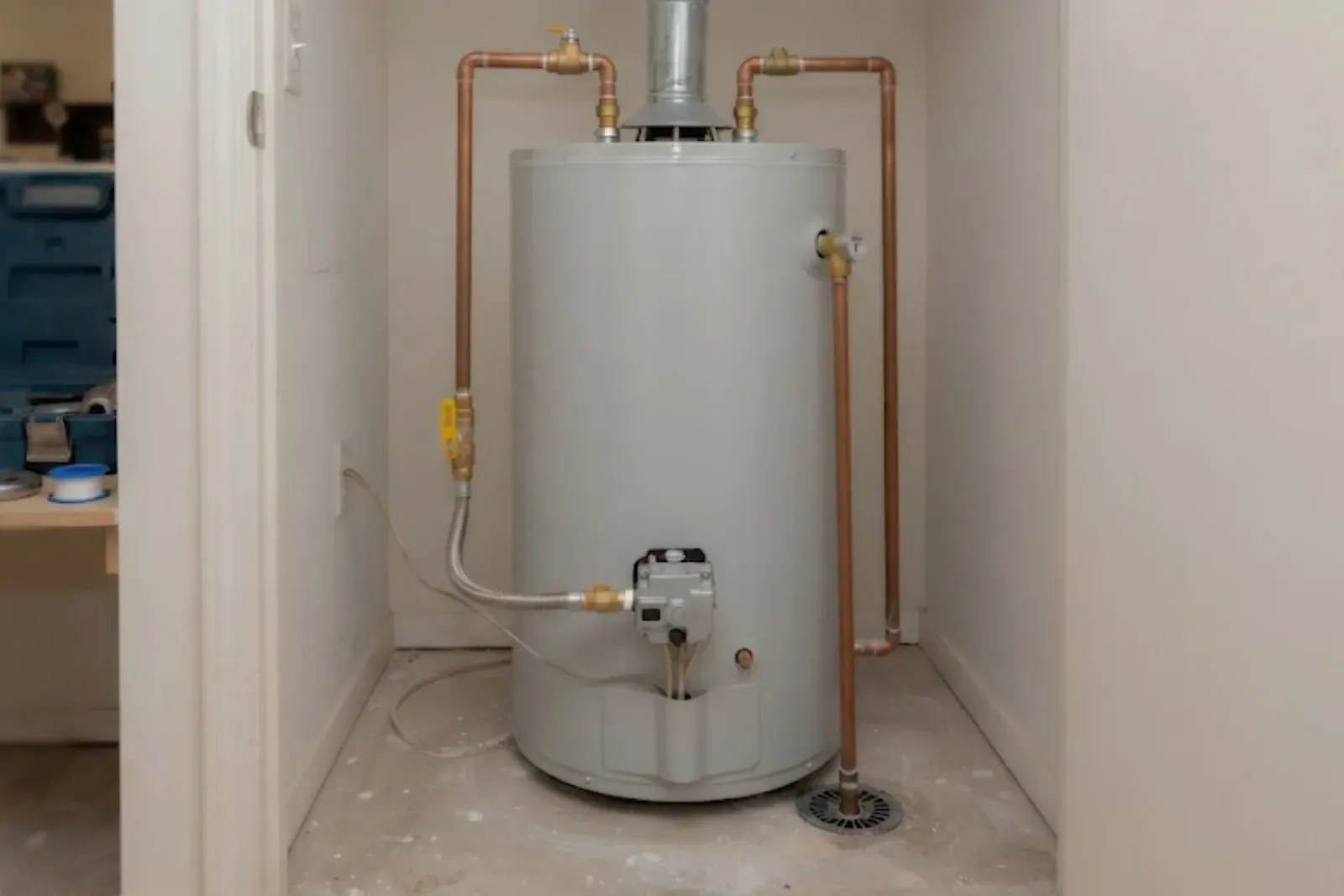
Water Heater Installation in Wasco, CA
Running out of hot water on the second shower, or building a home that needs its first heater, is a planning problem more than a repair one.
A licensed plumber from our dispatch network sizes the unit, checks the location and utilities, and quotes the job before the first fitting is touched.
Hot water that runs out: where an installation plan starts
When a household drains the tank before the last shower, the first thing to check is demand against capacity. More people, a soaking tub or a second bathroom added since the heater was set can leave a tank too small for the way the house is used today. Water heater installation in Wasco, CA is the planned work of selecting, placing, connecting, venting and testing a new heater so it matches the home.
That is different from a failure call. If your heater has already given out, use the page on replacing a failed tank instead. This page is for people who have time to choose well, including remodelers, builders and owners upgrading before something breaks.
Sizing a heater to the household
Tank capacity and recovery rate work together. A large tank stores more hot water, while a fast-recovery burner or element refills it sooner. Households with simultaneous demand, such as laundry running during showers, need more of one or both.
Start with the real pattern of use, not a rule of thumb. How many people shower in the same morning window, and does anyone fill a large tub? Does a dishwasher or washer draw hot water at the same time? Those answers shape the capacity, and the plumber confirms them against the space the heater has to fit.
Pick the unit before the old one quits
Call to talk through capacity, location and fuel. We scope the job, explain the code items and give a clear price before work starts.
Where the heater goes: garage, closet or somewhere new
Heaters are commonly installed in garages, interior utility closets and exterior closets. Each location carries its own checks, and the plumber confirms the details for your home.
| Location | Works well when | Watch for |
|---|---|---|
| Garage | There is floor space and an outside wall nearby | Extra code requirements can apply to heaters in garages, so ask which |
| Interior closet | The closet has the door, air and clearance the maker specifies | Cramped access and combustion air for gas models |
| Exterior closet | The home has a utility closet opening to the outside | Exposure to weather and cold nights, covered in the next sections |
| Relocated spot | The old location blocks a remodel or is hard to reach | New vent, gas, water and drain runs add time |
| New construction | Plans are still open | Heat pump space, vent paths and electric capacity are easiest to plan early |
Heater location also affects how far hot water travels to the farthest tap, which is one reason a relocation deserves a plan instead of a quick move.
Venting, gas line and electrical: the hookups behind the unit
These connections decide whether a new heater works safely. Most surprises in an install come from one of them.
- Venting A gas heater has a flue or vent that carries combustion gases outside. Size, slope, material and clearance follow the maker's instructions and code, and a new unit may not use the old vent unchanged.
- Gas line The line has to supply enough gas and end at an accessible shutoff with a sound connector. Gas work is within the plumbing license (C-36 covers gas appliance connections), and new piping is pressure tested before use.
- Electrical An electric tank needs a dedicated circuit sized to the unit, and a heat pump model may need its own provisions. Panel capacity is checked before the order.
- Water connections Shutoff valves and flexible connectors are inspected, and old corroded ones are replaced, not reused by default.
For homes with SoCalGas service, which includes Wasco, Shafter and McFarland, the gas company is the right contact for any smell of gas. Leave the building first and call from outside.
Heat pump models and the Energy Code
The 2025 Energy Code, in effect since January 1, 2026, encourages heat pump water heaters in new homes. Gas water heating in new dwellings must reserve space and provisions for a future heat pump unit. Heat pump models need backup heat if their inlet air is unconditioned.
Code items every new tank needs
California law requires water heaters to be braced, anchored or strapped against earthquake movement (Health and Safety Code 19211), and that includes new installations. The relief valve discharge pipe stays open, unthreaded at the end and never capped.
A drain pan under a heater in a finished space, or above living areas, catches slow leaks and can be piped to a safe discharge. A thermal expansion tank gives heated water room to expand in a closed system, and the plumber confirms whether your plumbing needs one. Where water pressure is above 80 psi, the California Plumbing Code calls for a pressure regulator.
From first call to final inspection
A planned install moves in a predictable order, which makes it easy to schedule around the household.
- Walk-throughLocation, fuel, existing hookups and the household's hot water habits are reviewed, and photos of the data plate and surrounding space help.
- Clear priceYou get a scoped price before work starts, listing the unit, the code items and any vent, gas or electrical changes.
- PermitPermit paperwork is prepared where required, so the job can be inspected.
- Install dayOld unit out, new unit set, braced and connected, then filled, tested for leaks and fired or energized.
- Inspection and handoffThe inspector checks the work where a permit applies. You get the shutoff locations and the manual.
Moving a heater or building new
Relocating a heater usually means new supply and hot lines, a new vent path, and a fresh gas or electric run. It is worth doing when the old spot blocks a remodel, crowds a garage door, or sits far from the kitchen and baths.
In new construction, the heater location can be fixed on the plans, before the walls close. That is the easiest time to leave a vent path, a condensate drain, a gas stub or a dedicated circuit in place. If your project also includes a layout of fixtures and piping, plumbing installation covers that side of the work.
What an installation quote is made of
Quotes vary because homes do. This list shows the parts behind a price so you can compare bids fairly.
Insurance rarely pays for a planned upgrade, since nothing has been damaged. To get a real price, call the number on this page.
Permits and scheduling across Wasco, Shafter and McFarland
Replacing or installing a water heater usually needs a permit and inspection from your city or county building department. For a home in Wasco, ask the City of Wasco building department what applies. Wasco's municipal code names the 2022 plumbing code edition, while the statewide edition took effect January 1, 2026, so confirm current practice with the city.
We schedule installs in Wasco and in Shafter, where the city's building permits page lists water heaters among residential permit types. McFarland homes are covered too, and the city's permit page names water heater replacements as a common project.
Before you schedule an install
Count how many people use hot water in the same window, add any large tubs or heavy appliance loads, and compare that against tank capacity and recovery rate. The plumber confirms the answer against the space available.
Bigger is not always better, since a larger tank costs more to heat and has to fit its location.
Often yes. Garages, interior closets and exterior closets are common heater locations. Each has clearance, venting and code questions that the plumber checks for your home, especially for gas models.
A water heater installation usually needs a permit and inspection from the city or county building department. Inside Wasco, ask the City of Wasco building department. Your plumber can handle the paperwork once the scope is clear.
It can be a strong fit when there is open air space, a condensate drain and suitable electrical capacity. The Energy Code encourages them in new homes but does not require one in every replacement. Talk through the location and your electrical panel before deciding.
New hot and cold lines, a new vent or electric run, and often a drain path. It also means patching walls or ceilings along the route. The scope is quoted before work starts.
Yes. If a tank is leaking or you have no hot water, call the 24/7 line and ask about a same-day appointment. The emergency replacement page explains what to shut off first.
Yes. Give the dispatcher the addresses and the unit types, and the work can be sequenced. Fuel type, location and tenant access shape the schedule more than anything else.
A heater installed to fit the house
Bring the plans, the photos or just the question. A licensed plumber walks you from sizing to final inspection.