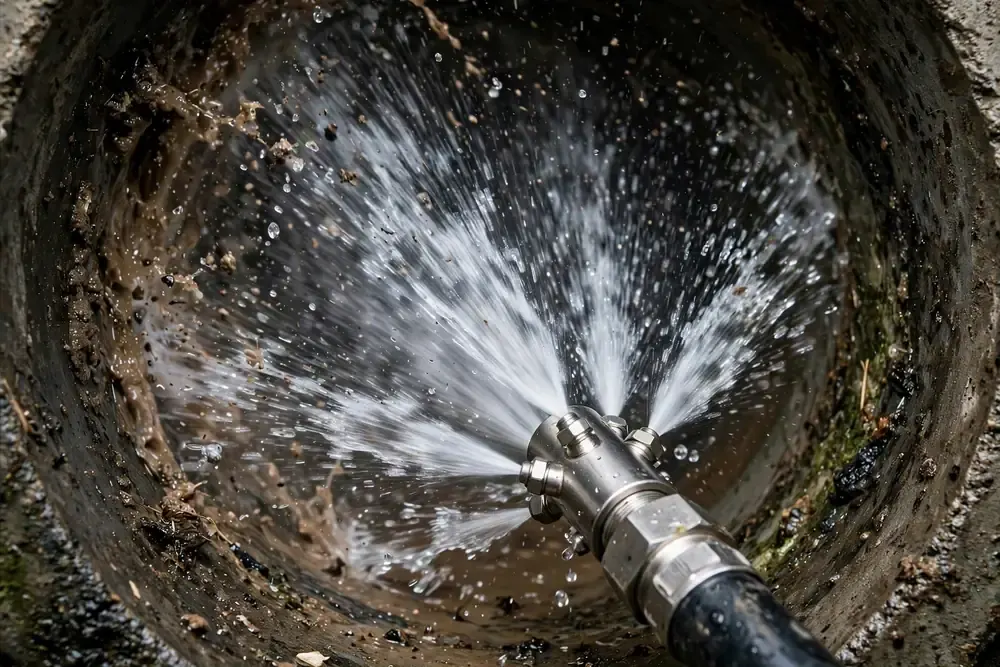
Is Hydro Jetting Safe for Old Pipes in a Wasco Home?
Hydro jetting is usually safe for an old drain or sewer pipe that is still structurally sound, and a poor idea for one that is cracked, collapsed or soft.
The condition of the pipe decides it, not the calendar age, which is why a camera look belongs before any high-pressure water.
The short answer: condition matters more than age
A pipe that is sixty years old and intact can often take a professional jetting. A pipe that is twenty years old but cracked, sagging or separated at a joint may not. The water does not create those defects, but it can find them, and a weak spot is where a pipe gives up.
Old materials fail in different ways. Cast iron scales and narrows from the inside, clay breaks at its joints, and Orangeburg, a fiber pipe sometimes sold as no-corrode pipe, softens and goes oval under the weight of the soil.
So hydro jetting is a pipe-by-pipe decision. If the camera shows sound walls and a stoppage made of grease, scale or roots, jetting is often the right tool. If it shows a crushed or buckled section, a different repair comes first.
Pipe material and what to expect from jetting
This table is a starting point for the conversation with the plumber, not a verdict on your line. Only a camera shows what is really down there.
| Pipe type | Common condition when old | Jetting outlook |
|---|---|---|
| Cast iron | Rough, scaled interior with rust buildup | Often suitable after a camera check, with lower pressure if walls look thin |
| Clay | Offset joints, cracks, root entry | Cautious. Roots can be cut, but loose joints may shift |
| Fiber (Orangeburg) | Soft, oval, buckled along the bottom | Usually not advised. Repair or lining is the real discussion |
| ABS or PVC | Interior usually sound, trouble comes from slope or joints | Generally fine |
| Galvanized steel drain | Rust narrowing the bore, pitted walls | Judge by camera, because the pipe can be fragile |
Guessing the material from the age of the house is unreliable, since repairs over the decades often mix pipe types in one run. A camera shows the material and the condition together.
Not sure the pipe can take it?
Call the number on this page and describe the stoppage. A licensed plumber can scope a camera look before any high-pressure work, with a clear price before work starts.
Why the camera goes in before the nozzle
A camera inspection shows cracks, root intrusion and clogs inside a sewer line. A sewer camera inspection before jetting turns a guess about the pipe into a picture of it, and the picture decides the nozzle, the pressure and whether to jet at all.
Pressure is not one fixed number. A California sanitary district, Oro Loma, describes its crews pushing the hose upstream at 1,200 to 1,500 psi and pulling back at 700 to 900 psi, but that is large municipal sewer-main equipment, not a household line. Do not treat those figures as a benchmark for your pipe.
What matters at home is that the plumber can match the nozzle and pressure to the pipe, and can back off when the screen shows fragile walls. Ask for a copy of the video and the findings. Oro Loma advises the same.
Signs the pipe may be too weak for high pressure
None of these rules jetting out by itself. Each one is a reason for the plumber to look first and choose gently.
- The same backup returns after every cleaning. That pattern often points to a sag, a break or a root-filled joint that water alone will not cure.
- Soil, sand or flakes of pipe come back on the cable. Material from the pipe wall itself means the wall is breaking down.
- The ground over the line is sunken or damp. A soft patch of yard along the route of the pipe can mean a collapsed or leaking section.
- A fiber or Orangeburg pipe is confirmed. These pipes buckle at the bottom, and pressure is the last thing a flattened pipe needs.
- Past repairs joined different materials. A rigid clay run feeding into plastic can hide a shifted joint at the transition.
If any of these fit, a gentler pass with a cable machine is often the first step. Our drain cleaning page explains how cabling and snaking compare with jetting.
How a careful jetting visit runs
The order matters more than the machine. A good visit leaves you with a cleaner pipe and a record of what was inside it.
- Find the access pointJetting and camera work go in through a cleanout, a roof vent or a pulled fixture. A clean access point makes the whole job gentler on the pipe.
- Look before cleaningThe camera goes in first to show the material, the slope, any offsets and what is blocking the line.
- Choose the nozzle and pressureA cutting nozzle for roots, a scouring nozzle for grease and scale, and a lower setting for pipe that looks thin.
- Work in passesThe hose moves forward and back in stages rather than parking the nozzle in one spot.
- Look again and write it upA second camera pass confirms the line is open and shows anything the cleaning uncovered. You get the findings and a clear price before any repair work starts.
Wasco sewer laterals: whose pipe it is and when a permit applies
Under Wasco's municipal code, the house connection sewer is not city property. The lateral runs from 12 inches outside the building wall to the city main, and maintenance and repair are the responsibility of the property owner. If a camera finds a failing section, that repair is yours, so it pays to inspect before approving high-pressure work.
The same chapter says no permit from the public works director is needed to clear stoppages or repair leaks, except when the sewer is replaced with a different material. If your fix means new pipe in a new material, ask the City of Wasco public works office about a permit first.
The code also calls for a cleanout where the house sewer meets the soil pipe. Locate yours before the plumber arrives, because it is the cleanest way in for both the camera and the jetter. The California Plumbing Code also calls for a cleanout at the upper end of each horizontal drain pipe, so ask the plumber whether yours meets that standard.
When the pipe is too far gone to clean
Sometimes the camera ends the jetting conversation. A crushed section, a sag that holds water or roots that have split a joint all call for repair rather than another cleaning. Horizontal drain pipes generally need a slope of at least 1/4 inch per foot, and a sagging run holds water that no nozzle can drain.
Options then include a spot repair, replacing the failed section, or trenchless methods. NASSCO, an industry association, notes that trenchless work can repair or even replace a pipe without digging it all up, with lining and pipe bursting among the named methods. Our sewer line repair page walks through how those choices are made.
Any dig starts with a call to 811 so buried utilities are marked. Before repair work begins, check the plumber at cslb.ca.gov, since the state licenses plumbing contractors under the C-36 classification and the board runs an online license check.
Jetting calls beyond Wasco city limits
We also dispatch to homes in Shafter and McFarland. The cities' own web pages do not spell out who owns the private sewer lateral, so a call to each city's public works office is a sensible first step before assuming the pipe is yours or theirs.
Questions about jetting old lines
It can if the wall is already thin or cracked, which is why the camera look comes first. A sound cast iron line with heavy scale is often a good candidate, and the plumber can choose a gentler setting for pipe that looks worn.
If a pipe fails during a careful job, it was usually close to failing anyway, and the camera record shows that.
You cannot tell from the surface. A camera shows a fiber pipe that is soft, oval or flattened along the bottom, and a plumber can read those signs.
If the line was ever repaired or replaced, the material may have changed partway along, so ask for the full camera pass rather than a short look.
Neither is better in every case. A cable is gentler and fine for a simple stoppage, while jetting scours grease, scale and roots off the walls more completely.
On a fragile line the plumber may start with a cable and move to jetting only if the camera says the pipe can take it.
Wasco's code says no permit is needed to clear stoppages or repair leaks, except when the sewer is replaced with a different material. Altering or building a sewer connection does need a permit from the public works director.
Rules can change, so confirm with the City of Wasco before any replacement work.
Yes, ask for it. A California sanitary district advises homeowners to request a copy of the results and the video after a camera inspection.
The record helps you compare repair quotes and shows what the pipe looked like before and after cleaning.
Get the pipe looked at before it is jetted
If drains keep backing up in an older house, call the 24/7 emergency line. Same-day appointments are offered when available for problems that can wait until daylight.