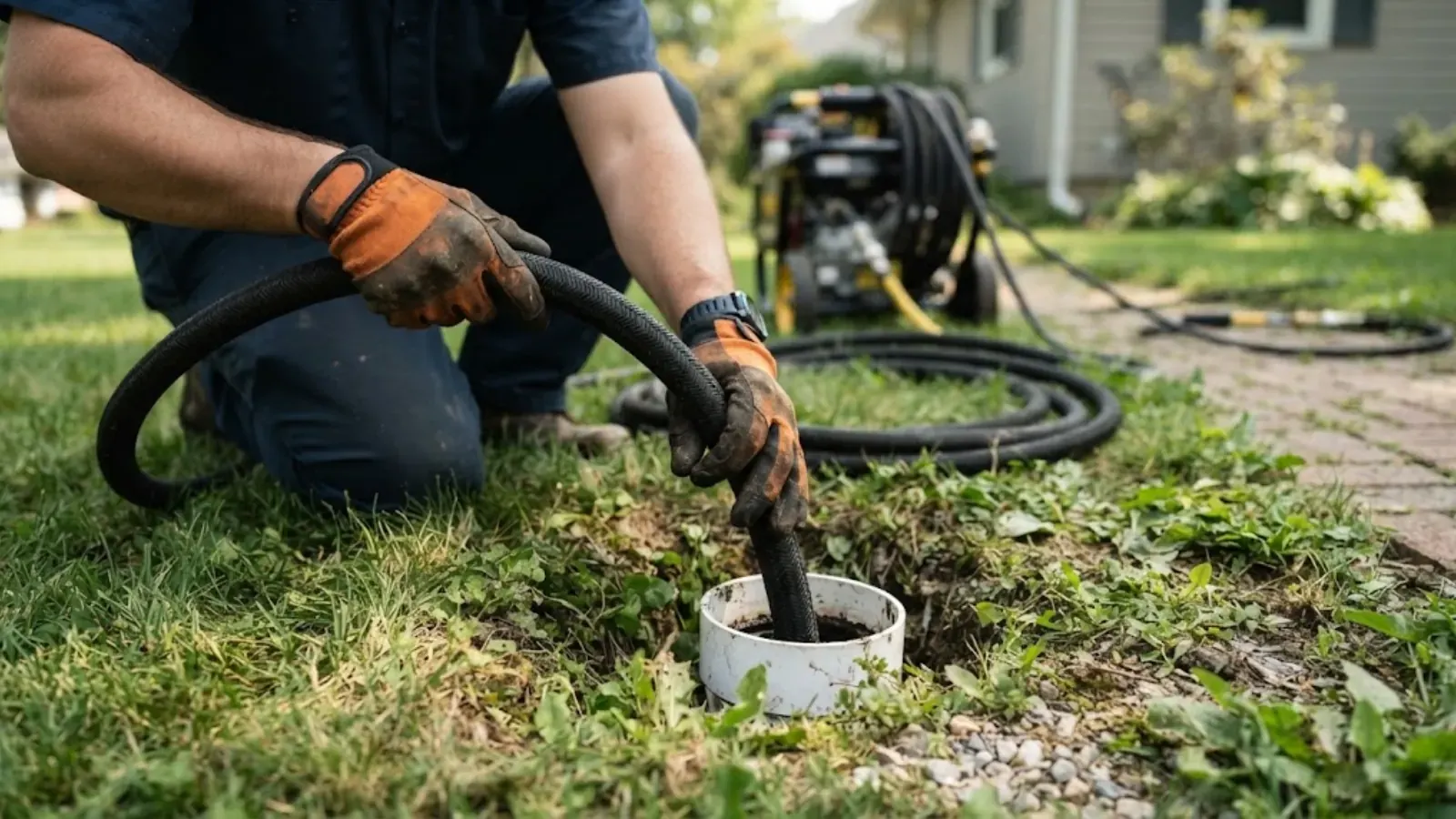
Emergency Hydro Jetting in Wasco, CA
If a line clogs, gets cabled, and clogs again, the cable probably opened a channel without cleaning the pipe.
Hydro jetting in Wasco, CA is a drain cleaning method that sends high-pressure water through a nozzle to scour grease, scale, silt and root growth off the inside of the pipe.
A line that keeps clogging usually needs a different tool
Repeat backups are frustrating, and they are also information. A line that clears and then stops up again within weeks is usually coated, not just plugged. Our 24/7 emergency line takes these calls at any hour, and a licensed plumber can look at the line the same day when one is available. While you wait, stop using the affected fixtures and keep the washer off so water is not added to a line that is already full.
Jetting is not magic and it is not right for every pipe. It is one method in a toolbox, chosen after the plumber sees what is actually in the line. The sections below explain what the jet does, when a cable is the better choice, and where jetting should be skipped.
Cable or jet: which one fits the situation
A cable and a jetter both clear drains, but they work differently. This table shows how plumbers usually think about the choice.
| Situation | Cable (snake) | Hydro jet |
|---|---|---|
| A soft, fresh clog in one fixture | Usually enough and quicker | More than the job needs |
| Grease coating a long line | Punches a hole, leaves the coat | Scours the wall clean |
| Thin roots at a joint | Cuts the roots back | Cuts and flushes them out |
| Heavy mineral scale | Scrapes part of it | Strips loose scale and flushes it |
| Cracked or offset pipe | Can catch and worsen the damage | Not recommended until a camera is checked |
| Object stuck in the pipe | Can hook or break it up | Cannot dislodge a solid, wedged item |
Neither method fixes a broken pipe. If the line is cracked, collapsed or sagging, the answer is a repair, covered under sewer line repair.
Clogged again after cabling?
Ask the dispatcher about camera-first jetting. A licensed plumber explains the options and gives a clear price before work starts.
Backing up now: what to do first
Jetting is often the second step after an emergency clear-out. These steps keep a backup from growing while you wait.
Hold these until the plumber is there
- Stop sending water down No flushing, laundry, dishwasher or long showers. The line cannot take more until it is cleared.
- Do not pour in a chemical A caustic product in a full pipe can splash back during the cable or jetting work.
- Keep kids and pets out If wastewater has reached the floor, keep people and animals away from it and do not walk it through the house.
- Leave the cleanout cap on If sewage is rising, an open cleanout can overflow into the yard. Tell the dispatcher where the cleanout is instead.
What a jet stream can clear: grease, roots and scale
Jetting is strongest against buildup that clings to the pipe wall. Here are the materials it handles best, and the limits.
- Grease and soap film Kitchen and laundry lines can gather a waxy layer that hot water alone may not move. A rotating jet nozzle cuts it free and flushes it downstream.
- Fine roots Hair-thin roots that enter at joints can be cut back and washed out. Roots are alive, so they return unless the opening they use is repaired.
- Mineral scale Scale can narrow a pipe over the years. The City of Wasco's 2022 water quality report does not list hardness, so we do not assume a scale problem. The camera shows whether one exists.
- Sludge and silt Fine solids settle in low spots and slow flow. A jet moves them toward the main so they stop collecting.
- Not a fix for a solid object A wedged toy, a broken pipe fragment or a collapsed section stays put. Those need retrieval or a repair.
A restaurant, salon or shop with a grease-heavy line has a stronger case for scheduled jetting, which is part of our approach to commercial plumbing.
Why the camera goes in before the jet
A jet is a powerful tool, and force should be matched to the pipe. Before jetting, a small camera on a flexible rod checks the line for cracks, offsets, sags and roots. The footage decides whether jetting is safe and where the nozzle should stop.
This is how jetting stays a controlled job rather than a gamble. If the camera shows a broken or collapsed section, the plumber stops, explains what is on the screen and offers the right repair instead of forcing water into a failed pipe.
According to Oro Loma Sanitary District, a California sewer agency, a clog that keeps coming back calls for a licensed plumbing contractor to inspect the line with a camera. The district also advises asking for a copy of the results and video, so request both.
Ask to see the footage. A plumber who is confident in a diagnosis will not mind showing you the screen. For planned work, a standalone camera inspection also gives you a record of the line before and after cleaning.
Older pipes: when jetting needs extra care
Pipe material matters more than its age. Cast iron can develop rough buildup inside, and jetting may break loose pieces that travel to the next bend. Clay pipe can have loose or offset joints, and a strong stream can find them.
Orangeburg, a tar-and-fiber sewer pipe sold as no-corrode pipe, is the one to be most careful about. The pipe softens, goes oval under soil load and buckles at the bottom, which means force through it is a poor idea.
In every case the pressure is adjusted to the line, and the camera decides whether jetting happens at all. We keep this at the method level because the right setting depends on what is in the pipe, not a number printed on a brochure.
Backups: where jetting fits after the emergency clear-out
When sewage is already backing up, the first job is a clear-out through the cleanout so water can leave the house. Jetting often comes next, once the line is moving, to clean the walls and reduce the chance of the same blockage returning.
No method stops roots forever. A jetted line with a root entry at a cracked joint will see growth again, and the honest answer is a repair of that joint. Where the stoppage happens on the main line itself, sewer line cleaning covers the scheduling side of keeping it clear.
What a jetting visit looks like on the ground
Jetting is a short, loud and wet job. Here is the sequence so you can plan around it.
- Locate the entryThe plumber chooses an entry point, usually a cleanout, and checks that the line can take a hose.
- Look with the cameraA scope run shows the condition of the pipe and the material blocking it.
- Pass the nozzle throughThe hose goes in with the nozzle sending water backward, which pulls it along the pipe and scrubs the walls on the return pull.
- Flush and film againWater carries debris to the main. A second camera pass confirms the wall is clean.
- Explain what was foundYou get a plain summary of what was removed, what is left, and whether a repair or a repeat visit makes sense.
What changes the cost of a jetting visit
Jetting usually takes more setup and time than a simple cable run. These are the real factors behind a quote.
Insurance may not cover the cleaning of a line itself, though some policies cover water damage from a backup. Check with your insurer.
Want your real number? Call the number on this page. We describe the plan first and state the price before work starts.
Hydro jetting questions we hear in Wasco
Yes. The emergency line runs 24/7, and a licensed plumber is dispatched for backups and stopped lines on nights and weekends. If the line can be cleared with a cable first, that usually comes before jetting.
Planned jetting for a line that keeps clogging can often be scheduled for a same-day appointment when available. The same dispatch covers Shafter and McFarland as well.
It depends on the pipe, which is why a camera runs first. Sound cast iron, clay and plastic lines can often be jetted with the pressure adjusted. Cracked, collapsed or Orangeburg lines should not be.
If the camera shows damage, the plumber will tell you and suggest a repair instead.
Neither is better in every case. A cable is right for a soft, local clog. A jet is better when grease, scale or roots coat the pipe wall, since a cable only cuts a channel through them.
It can cut and flush roots that have grown into a line. It does not kill the tree or close the gap in the pipe, so roots usually return until the entry point is repaired.
A toilet that stops up alone is usually an obstruction in the toilet itself, handled by toilet repair. Jetting is for the drain lines behind it, which matters when several toilets, tubs and sinks are slow together.
Yes. Landlords and property managers can authorize a visit and ask for camera footage per line. Recurring clogs in one unit often trace to a shared line, and the footage helps show whether the building or the tenant's use is the cause.
Clean the pipe wall, not just the clog
Call the 24/7 line, say how often the line has stopped, and we will recommend the method that fits what is in the pipe.