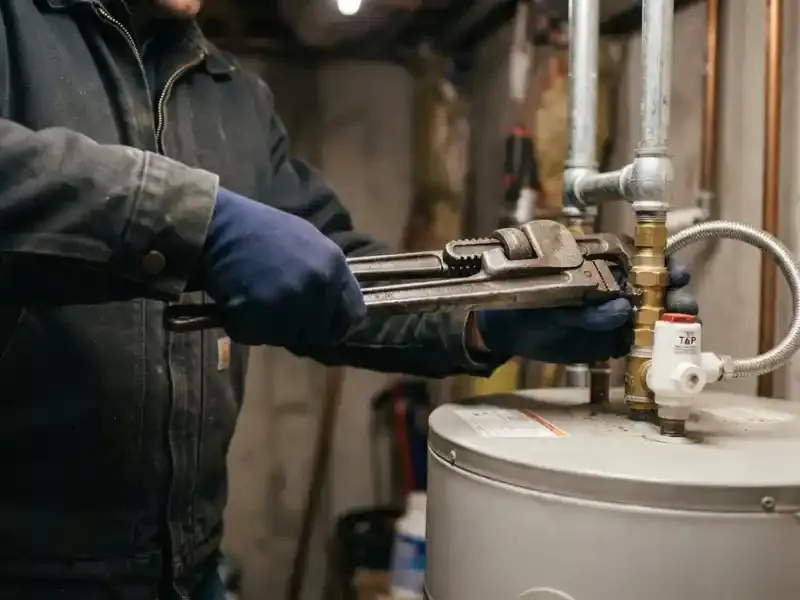
Electric Water Heater Has No Hot Water: What to Check First
When an electric water heater stops making hot water, the cause is usually a tripped breaker, a tripped reset button on the thermostat, or a burned-out heating element.
You can check the first two safely in a few minutes. Anything past that involves live wiring and belongs to a licensed plumber or electrician.
Why an electric tank goes cold
An electric tank heats water with one or two electric elements, controlled by thermostats. If power stops reaching the elements, a thermostat fails, or an element burns out, the water stays cold or goes lukewarm.
The pattern tells a lot. Fully cold water points at power or the upper element. Hot water that runs out too fast points at the lower element or a build-up of sediment. A wet floor under the tank points at the tank itself, which is a different decision entirely.
Switch the power off before you open any panel
An electric heater is wired to a high-voltage circuit. Treat the checks below as look-and-reset steps only, and stop if anything looks wet, scorched or melted.
Safety first
- Turn the breaker off Before removing any access cover, switch off the heater's breaker at the panel. Do not trust the heater's own switch.
- Keep water and wiring apart If there is water on the floor around the heater, stay out of it and leave the power off until a plumber has looked.
- Do not reset again and again A reset button that trips a second time is telling you something is wrong. Repeated resetting does not fix a fault.
- Smell burning or see scorch marks? Leave the breaker off, keep the area clear, and call the 24/7 line. If you see smoke or flames, call 911.
Still cold after the reset?
Call the number on this page. A licensed plumber can scope an element and thermostat test by phone.
Checks in order, easiest first
Work down this list and stop as soon as the problem is solved or you reach a step that needs tools and testing.
- Look at the breakerFind the heater's circuit at the panel. If the breaker is in the middle or off position, switch it fully off and then back on.
- Check for a leak at the baseLook at the floor, the drain pan and the pipe connections. A leaking tank is not a repair, and the power should stay off.
- Find the reset buttonWith the breaker off, remove the upper access cover and insulation to find the red reset button on the upper thermostat. Press it once, replace the cover, and restore power.
- Check the temperature settingMost households only need the heater set at 120 F, according to the Department of Energy. A setting turned too low can feel like a failure.
- Wait and testA full tank takes time to heat. If the water is still cold after that, the problem is likely an element or thermostat, and testing it needs an electrical meter.
Symptom, likely part, and who handles it
| What happens | Likely cause | Who handles it |
|---|---|---|
| No hot water at all | Breaker, reset button, upper thermostat or upper element | Homeowner for breaker and reset, plumber for parts |
| Lukewarm water that never gets hot | Lower element or lower thermostat | Plumber |
| Hot water runs out quickly | Lower element, sediment or a failing dip tube | Plumber |
| Breaker trips again right away | Shorted element or wiring fault | Plumber or electrician |
| Water on the floor | Leaking tank or fitting | Plumber, likely replacement |
Elements and thermostats are replaceable parts, so a tank with a bad element is usually a repair. A tank that is leaking at the tank body is not.
Repair or replace: the age question
The Department of Energy says storage water heaters last 10 to 15 years. A heater inside that window with a failed element is normally worth fixing, and a water heater repair visit can test the thermostats and elements and swap the bad part.
A tank at the end of that range, or one that is leaking, is a different conversation. Repair parts cannot fix a rusted-through tank, and replacing the heater often makes more sense than paying for repeated repairs.
Ask the plumber to tell you the age of the tank, which part failed and what the other parts look like. The price should be clear before work starts.
Wasco winters, bracing and permits for a replacement tank
Bakersfield, the nearest National Weather Service climate station, has a January average low of 40.5 F and an average high of 58.5 F. Cold winter inlet water takes longer to heat, so a heater with a weak element can seem fine in the fall and fail you in January.
If the tank is replaced, California law requires water heaters to be braced, anchored or strapped against earthquake movement (Health and Safety Code 19211). A replacement usually needs a permit and inspection from your city or county building department.
The City of Wasco's code text still names the 2022 plumbing code while the state's 2025 edition took effect on January 1, 2026, so confirm current permit needs with the city before the swap.
Gas heaters and other mix-ups
This guide is for electric tanks only. A gas water heater has a pilot or igniter instead of elements, and a gas smell means you should leave the building and call SoCalGas or 911 from outside.
Also check whether anything else in the house has changed. A recent power outage, a breaker that was flipped during other work or a new appliance on the same circuit can all take the heater offline.
Hot water emergencies and where we dispatch
A cold shower is an inconvenience, but a leaking tank is not. Close the cold supply valve on top of the heater if it is leaking, keep the power off, and call the 24/7 emergency line.
We also dispatch to homes in Shafter and McFarland. Same-day appointments are offered when available, and California requires a contractor license for jobs at or above the state threshold, so check any plumber at cslb.ca.gov before work begins.
Electric water heater questions
A breaker that trips again after you reset it usually means a shorted element or a wiring fault. Do not keep switching it back on.
Leave the power off and have the heater tested, since the fault is in the heater circuit and not something a reset can solve.
The part is simple, but the job involves live wiring, draining the tank and sealing the new element. Many homeowners prefer a licensed plumber for that reason.
The state classifies plumbing contractors under C-36, which covers installing and maintaining equipment that heats water.
The Department of Energy says most households only need the heater set at 120 F. Higher settings raise burn risk and energy use without much benefit for most homes.
Yes. California law requires new and replacement water heaters to be braced, anchored or strapped against earthquake motion. The plumbing code spells out the strap positions, and the installer should handle it.
Ask the City of Wasco what permit and inspection applies to your replacement.
It can be one reason. Sediment settles at the bottom of the tank and insulates the lower element from the water. A failed lower element or a damaged dip tube gives the same symptom, so a test is the only way to know.
Get hot water back safely
If the breaker keeps tripping or the tank is leaking, call the 24/7 emergency line. Same-day appointments are offered when available, with a clear price before work starts.